Discuss your project

VR training for industrial tasks

Examples of scenarios for training safe work methods, mastering equipment and coordination between employees. Choose an area to see what participants practise and how their performance is monitored.

case studies
24
training scenes
30
participant roles
29
What is counted

A case study describes one industrial task. It may belong to several areas but is counted once. A training scene is a separate virtual location. Roles are the distinct participant roles named in the scenario instructions. The scenarios were developed for EVRAZ.

Case study catalogue

24 case studies. Filter by application area, training objective and training format. Each case study is described in detail below.

Shown: 24 of 24

Case studyApplication areaTraining objectiveTraining formatVariants
Loading and unloading gondola railcars demo scene Lifting and cargo handling Operating procedure Individual or over network 1
Taking a power transformer out for repair: 6.3 kV and 110 kV demo scene Electrical safety Operating procedure Individual or over network 1
Extinguishing fires: electrical equipment, wood, fuels and lubricants Fire safety Abnormal situation response, Knowledge and skills check Individual. Individual or over network 7
Fire in a building: alarm, extinguishing, evacuation Fire safety, Occupational safety and first aid Abnormal situation response Individual or over network 2
Hot work: welding and gas cutting Fire safety, Gas-hazard and confined-space operations Abnormal situation response Team session over network 2
Switching by switching form: 6 kV indoor switchgear with withdrawable trucks Electrical safety Operating procedure Team session over network 1
Gas detector alarm Gas-hazard and confined-space operations Abnormal situation response Team session over network 1
Gas-hazard work: fitting a blank on a gas pipeline Gas-hazard and confined-space operations Operating procedure Team session over network 1
Work in a well: confined space Gas-hazard and confined-space operations, Occupational safety and first aid Operating procedure Team session over network 1
Lighting a gas burner Gas-hazard and confined-space operations, Equipment operation and maintenance Operating procedure Team session over network 1
Steel ladle burn-through Metallurgical operations Abnormal situation response Team session over network 1
Slinging and moving loads by crane Lifting and cargo handling Operating procedure Team session over network 4
Overhead crane: repair lockout and abnormal situation Lifting and cargo handling, Equipment operation and maintenance Operating procedure, Abnormal situation response Team session over network 3
Loading rods into a rod mill Equipment operation and maintenance, Lifting and cargo handling Operating procedure, Abnormal situation response Team session over network 3
Changing a tyre on a tyre-fitting stand Equipment operation and maintenance Operating procedure, Abnormal situation response Individual or over network 3
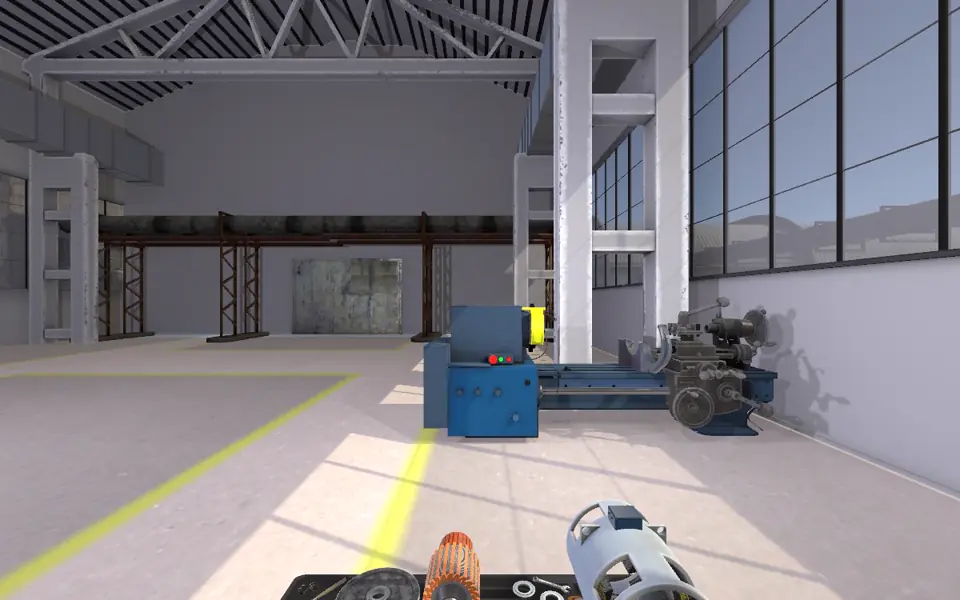
Mounting a workpiece of up to 500 kg on a lathe Equipment operation and maintenance, Lifting and cargo handling Operating procedure Individual or over network 1
DC motor: design and connection Equipment operation and maintenance, Electrical safety Operating procedure Individual or over network 4
Personal protective equipment: selection and control Occupational safety and first aid Identifying hazards and violations Individual or over network 1
First aid for an injured worker Occupational safety and first aid Abnormal situation response Individual or over network 1
Work at height: erecting scaffolding and permit to work Occupational safety and first aid Operating procedure Individual or over network 1
Unexpected situations: electric shock and an electrical cabinet fire Occupational safety and first aid, Electrical safety, Fire safety Abnormal situation response Individual or over network 1
Moving safely around the industrial site Occupational safety and first aid Identifying hazards and violations Individual or over network 1
Harmful and hazardous workplace factors Occupational safety and first aid Identifying hazards and violations Individual or over network 1
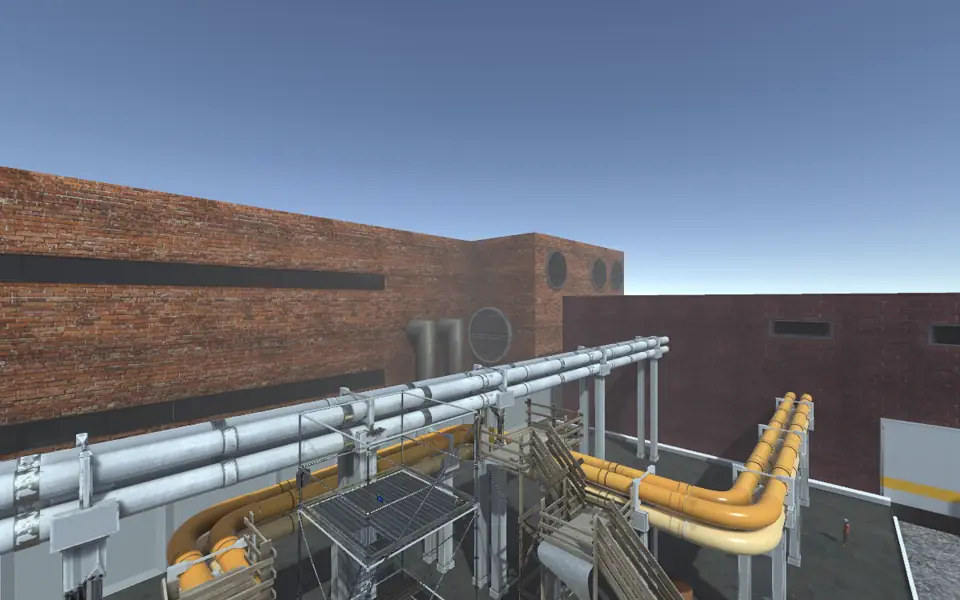
Introductory tour of the industrial site Occupational safety and first aid Familiarisation Individual or over network 1

Individual: one participant, no server. Team session over network: each participant has a role. Individual or over network: can be done alone or as a networked session.

Case studies in detail

Loading and unloading gondola railcars

Lifting and cargo handling

Loading and unloading gondola railcars

Application
Preparing employees to coordinate with each other when loads are moved.
What is practised
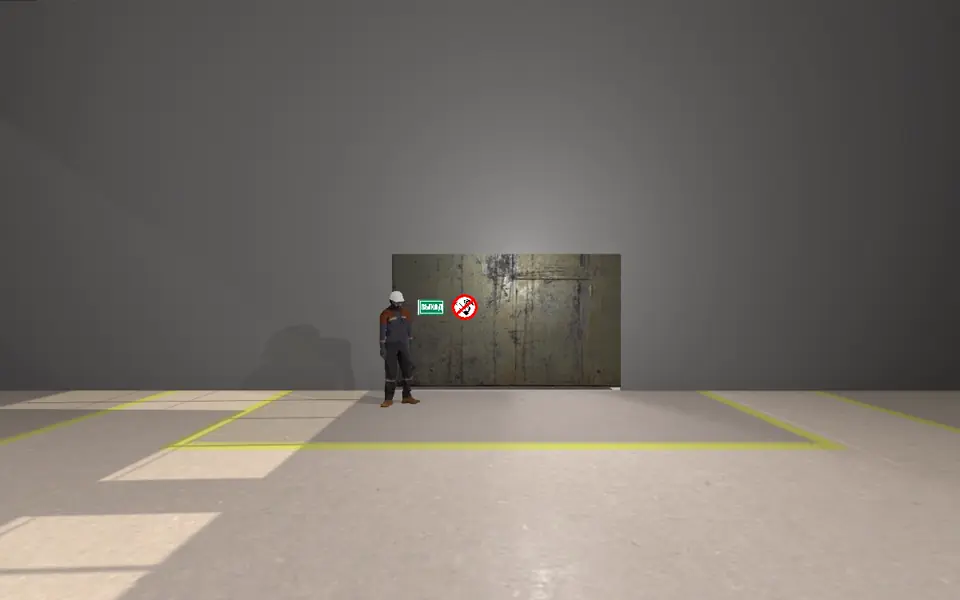
Giving signals to the crane operator, working with the slinger, watching the load travel zone and responding when people enter the danger zone.
View details
Monitoring
The simulator records the participant’s actions defined by the scenario, any omissions and any breaks in the sequence. The results are used to review the session.
Training format
Individual or over network
Roles
Signaller (Roles: 1)
 
The participant is the signaller: they sign the work execution plan, give hand signals, check the slinging, climb down into the railcar and remove the slings.
Training variants
  • Loading and unloading gondola railcarsOperating procedure · Individual or over network · Roles: 1
Discuss a similar task
Taking a power transformer out for repair: 6.3 kV and 110 kV

Electrical safety

Taking a power transformer out for repair: 6.3 kV and 110 kV

Application
The scenario trains the sequence of switching operations when a power transformer is taken out for repair on the 6.3 kV generator switchgear side and the 110 kV side.
What is practised
The electrician opens the circuit breakers, checks that the disconnectors are open, hangs “Do not switch on! People at work” signs, tests the voltage indicator and confirms there is no voltage, closes the earthing switches and hangs “Earthed” signs. The scenario has 35 items.
View details
Monitoring
The simulator records every item and its order. The supervising person sees the electrician’s actions. A session can start from any of the 35 items: earlier items are prepared automatically and marked separately in the report.
Training format
Individual or over network
Roles
Electrician, Supervising person (Roles: 2)
Training variants
  • Transformer outage for repairOperating procedure · Individual or over network · Roles: 2
Discuss a similar task
Extinguishing fires: electrical equipment, wood, fuels and lubricants

Fire safety

Extinguishing fires: electrical equipment, wood, fuels and lubricants

Application
The scenario trains employees to choose and use primary fire-fighting equipment and checks how they do it.
What is practised
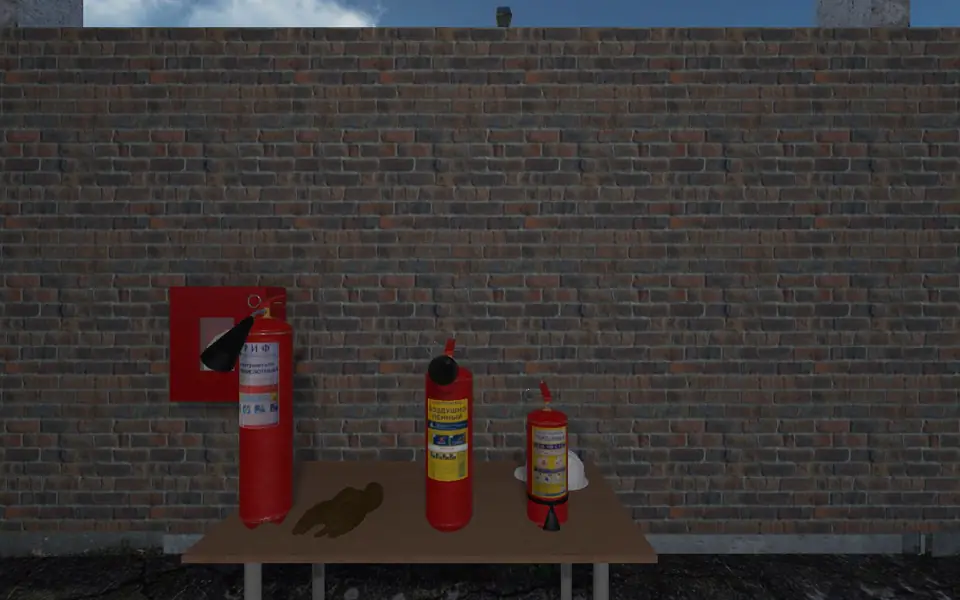
The participant identifies what is burning and chooses the means: an air-foam, powder or CO₂ extinguisher, a fire hose, or sand for fuels and lubricants. They pull the pin and put out the fire. Before tackling an electrical appliance they put on gloves.
View details
Monitoring
The simulator records the completed stages: choice of equipment, preparing the extinguisher and putting out the fire. Each material has a training variant and a check variant.
Training format
Individual. Individual or over network
Roles
Employee (Roles: 1)
Training variants
  • Electrical equipment: trainingAbnormal situation response · Individual · Roles: 1
  • Electrical equipment: checkKnowledge and skills check · Individual · Roles: 1
  • Wood: trainingAbnormal situation response · Individual · Roles: 1
  • Wood: checkKnowledge and skills check · Individual · Roles: 1
  • Fuels and lubricants: trainingAbnormal situation response · Individual · Roles: 1
  • Fuels and lubricants: checkKnowledge and skills check · Individual · Roles: 1
  • Fire-fighting equipment: trainingAbnormal situation response · Individual or over network · Roles: 1
Fire in a building: alarm, extinguishing, evacuation

Fire safety · Occupational safety and first aid

Fire in a building: alarm, extinguishing, evacuation

Application
The scenario trains an employee to act during a fire in an industrial building.
What is practised
The participant reports the fire by phone, activates the fire alarm and puts out the fire with suitable equipment. If wiring is burning, they first switch off power at the panel. They then lead colleagues out, go down the stairs and tell the fire service whether anyone is left inside.
View details
Monitoring
The simulator records the actions taken and the answers to check questions: whom to call, what to report, how to leave the building.
Training format
Individual or over network
Roles
Employee (Roles: 1)
Training variants
  • Burning woodAbnormal situation response · Individual or over network · Roles: 1
  • Burning electrical equipmentAbnormal situation response · Individual or over network · Roles: 1
Hot work: welding and gas cutting

Fire safety · Gas-hazard and confined-space operations

Hot work: welding and gas cutting

Application
The scenario prepares a welder or gas cutter and a fire watcher for hot work on scaffolding.
What is practised
The worker chooses documents, tools, an extinguisher and scaffolding, covers flammable objects and starts work. The fire watcher takes position, refuses to carry gas cylinders and reports a fire. If a fire starts, the worker puts it out. When the torch stops with a pop, they close the oxygen and propane valves, cool the torch and check the hoses.
View details
Monitoring
The simulator records the actions of both roles and the answers to check questions, including the choice of documents and equipment.
Training format
Team session over network
Roles
Welder, Fire watcher, Gas cutter (Roles: 2)
Training variants
  • WeldingAbnormal situation response · Team session over network · Roles: 2
  • Gas cuttingAbnormal situation response · Team session over network · Roles: 2
Switching by switching form: 6 kV indoor switchgear with withdrawable trucks

Electrical safety

Switching by switching form: 6 kV indoor switchgear with withdrawable trucks

Application
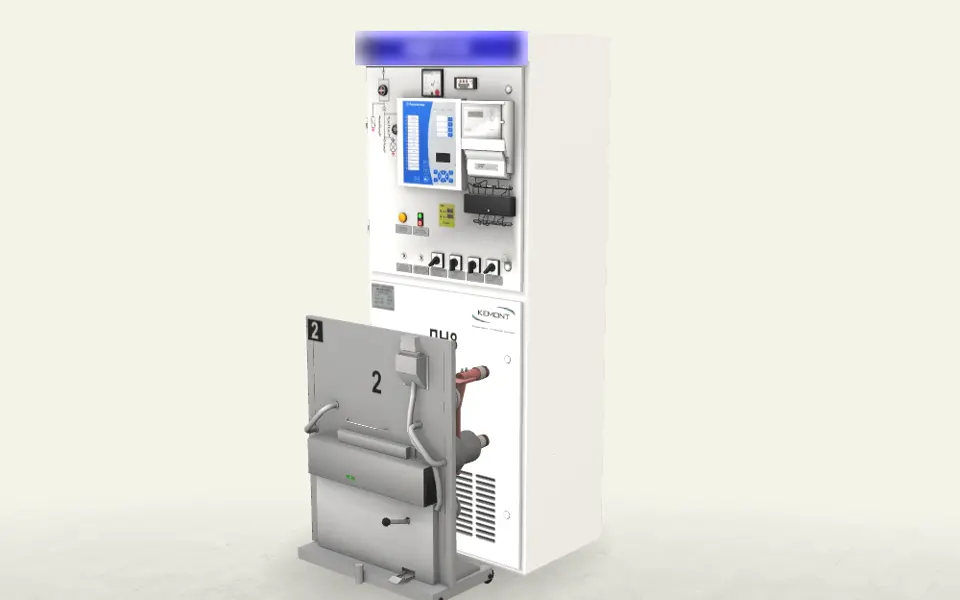
The scenario prepares a duty electrician and a supervising person for switching operations in 6 kV indoor switchgear.
What is practised
The participants accept the task, make entries in the operating log, choose documents for the switching form and protective equipment. The supervising person reads out each item of the form, the electrician repeats and performs it, and the supervising person marks it done. The electrician works with the safety shutters and checks contacts with a voltage indicator.
View details
Monitoring
The simulator records each role’s actions item by item and the answers to check questions on relay protection and automation.
Training format
Team session over network
Roles
Duty electrician, Supervising person (Roles: 2)
Training variants
  • Switching: 6 kV indoor switchgearOperating procedure · Team session over network · Roles: 2
Gas detector alarm

Gas-hazard and confined-space operations

Gas detector alarm

Application
The scenario trains two workers to act during gas-hazard work and when gas detectors go off.
What is practised
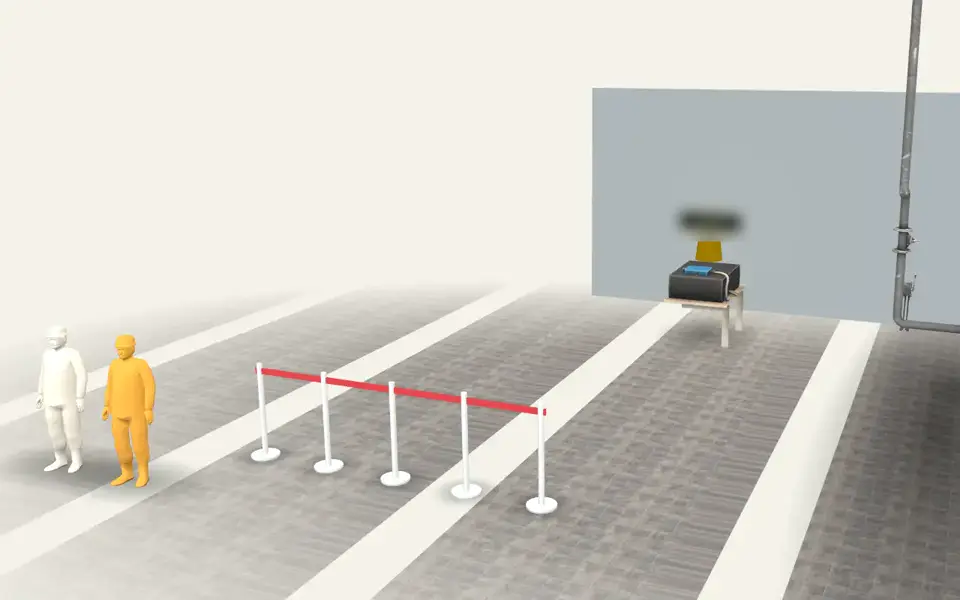
The responsible performer fills in the log, turns on a personal gas detector and orders air sampling. When the fixed gas detector goes off, they lead the electrician out of the room, report to the manager that the carbon monoxide (CO) limit is exceeded and, after the pipeline is checked, have the exit fenced off.
View details
Monitoring
The simulator records both roles’ actions and the answers to questions on crew composition, the response sequence and permissible gas concentrations.
Training format
Team session over network
Roles
Responsible work performer, Electrician (Roles: 2)
Training variants
  • Gas detector alarmAbnormal situation response · Team session over network · Roles: 2
Gas-hazard work: fitting a blank on a gas pipeline

Gas-hazard and confined-space operations

Gas-hazard work: fitting a blank on a gas pipeline

Application
The scenario prepares a crew for gas-hazard work under a permit to work, from preparing the workplace to fitting the blanks.
What is practised
The work manager and performer issue the permit, brief the crew, ask about their condition and hand out gas detectors. The gas workers check CO and O₂ levels, fence off the area, purge the pipeline section with steam, put on breathing apparatus and fit blanks at the flange joints. The gas rescuer takes air samples.
View details
Monitoring
The simulator records the actions of five roles, the order of operations and the answers to check questions, including the gas-hazard group of the work. The course of the scenario depends on the measured gas concentration.
Training format
Team session over network
Roles
Gas-hazard work performer, Gas-hazard work manager, Gas worker, Gas rescuer (Roles: 5)
Training variants
  • Fitting a blank on a gas pipelineOperating procedure · Team session over network · Roles: 5
Work in a well: confined space

Gas-hazard and confined-space operations · Occupational safety and first aid

Work in a well: confined space

Application
The scenario prepares a crew for confined-space work, using a well as the example.
What is practised
The responsible performer checks the workers’ certificates and condition, issues personal gas detectors, a safety harness and a signal-safety line, and inspects them. The workers fence off the area, open the manhole, test the ladder, pump out water, measure gas levels and climb down into the well.
View details
Monitoring
The simulator records the actions of three roles. If the performer has not fully inspected the safety harness, the scenario ends with the worker falling.
Training format
Team session over network
Roles
Responsible work performer, Crew member (Roles: 3)
Training variants
  • Work in a wellOperating procedure · Team session over network · Roles: 3
Lighting a gas burner

Gas-hazard and confined-space operations · Equipment operation and maintenance

Lighting a gas burner

Application
The scenario trains two workers to light a gas burner, including a leak check and radio communication.
What is practised
One worker inspects the supply pipeline, the safety shut-off valve and the igniter, checks the valve for leaks on the pressure sensor, powers the igniter and opens the valves. The second worker watches for the flame and reports by radio.
View details
Monitoring
The simulator records the order of actions and the messages exchanged. The scenario branches if the valve leaks, if the igniter flame does not appear and if the burner flame goes out.
Training format
Team session over network
Roles
Employee (Roles: 2)
Training variants
  • Lighting a gas burnerOperating procedure · Team session over network · Roles: 2
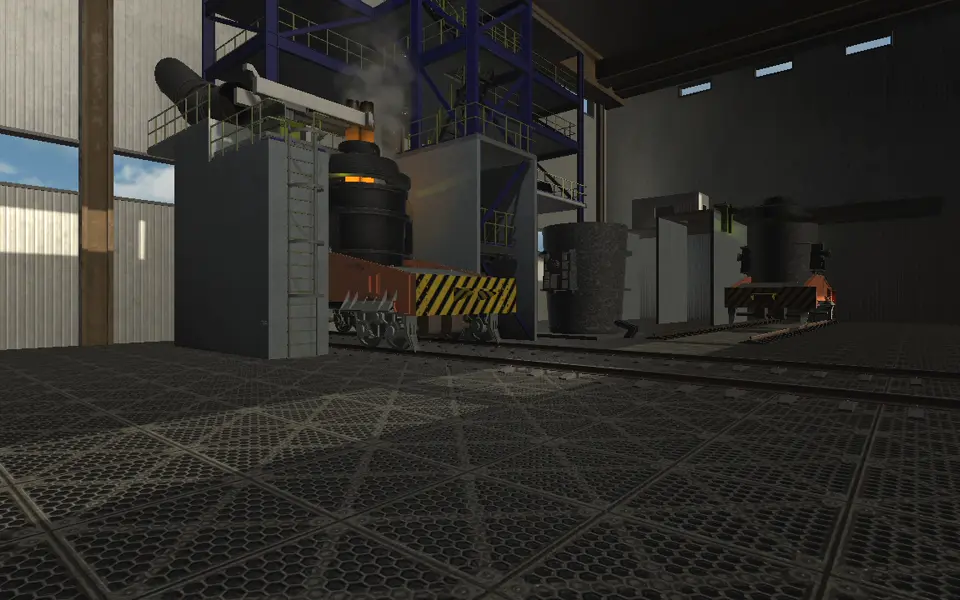
Steel ladle burn-through

Metallurgical operations

Steel ladle burn-through

Application
The scenario trains a shift crew to act together when a steel ladle burns through.
What is practised
An employee reports the burn-through to the steelmaker. The steelmaker stops bottom stirring and raises the ladle furnace roof and electrodes. The shift foreman alerts the transfer car operator and the shift supervisor. The supervisor sets the order of actions, workers fence off the area, the remaining metal is poured off on the foreman’s command, and the supervisor checks the result.
View details
Monitoring
The simulator records the actions of five roles and the answers to check questions when messages are received and passed on.
Training format
Team session over network
Roles
Employee, Steelmaker, Shift foreman, Transfer car operator, Shift supervisor (Roles: 5)
Training variants
  • Steel ladle burn-throughAbnormal situation response · Team session over network · Roles: 5
Slinging and moving loads by crane

Lifting and cargo handling

Slinging and moving loads by crane

Application
The scenario trains a crane operator and a slinger to work together when moving, unloading and storing loads.
What is practised
The slinger chooses serviceable lifting gear for the load, slings it, checks the slinging after a 200–300 mm lift, makes sure nobody is in the zone and guides the operator. The operator sounds the signal, brings the crane over, then lifts, moves and lowers the load.
View details
Monitoring
The simulator records each role’s actions in a separate list. If the slinging is incorrect, the slinger must unhook the load and sling it again.
Training format
Team session over network
Roles
Crane operator, Slinger (Roles: 2)
Training variants
  • Moving a load across the shopOperating procedure · Team session over network · Roles: 2
  • Unloading from a truckOperating procedure · Team session over network · Roles: 2
  • Placing a load on supportsOperating procedure · Team session over network · Roles: 2
  • Loading and turning over a containerOperating procedure · Team session over network · Roles: 2
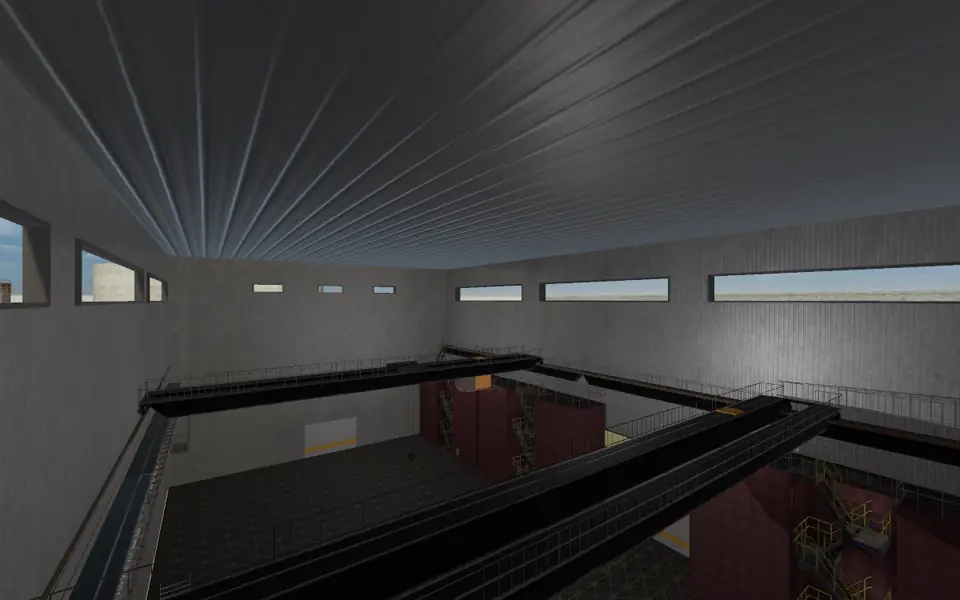
Overhead crane: repair lockout and abnormal situation

Lifting and cargo handling · Equipment operation and maintenance

Overhead crane: repair lockout and abnormal situation

Application
The scenario trains the procedure for admitting a crew to repair an overhead crane and the response to a crane failure.
What is practised
The operator checks the crane, drives it into the repair zone, switches off the isolator and hands over the key tag. The repair supervisor keeps the records and issues tasks. The maintenance fitter warns operators of neighbouring cranes and installs end stops. The electrician isolates and earths the conductor rails. If the crane fails, the responsible person crosses the galleries clipped on with a karabiner and brings the operator out.
View details
Monitoring
The simulator records each role’s actions, the log entries and the answers to check questions.
Training format
Team session over network
Roles
Repair supervisor, Crane operator, Maintenance fitter, Electrician, Responsible person, Duty electrician (Roles: 2, 3, 4)
Training variants
  • Crane repair lockoutOperating procedure · Team session over network · Roles: 4
  • Moving a loadOperating procedure · Team session over network · Roles: 2
  • Abnormal situationAbnormal situation response · Team session over network · Roles: 3
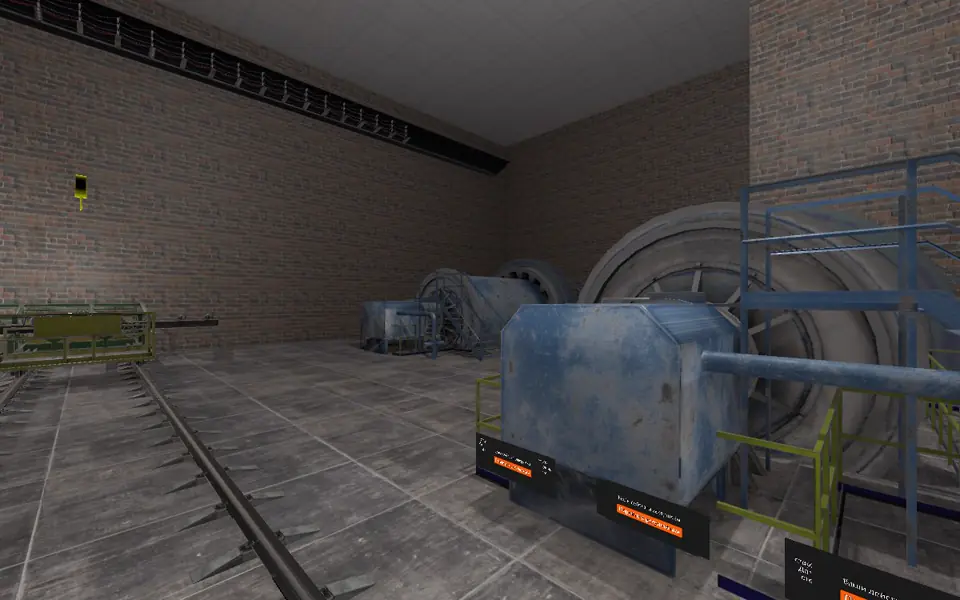
Loading rods into a rod mill

Equipment operation and maintenance · Lifting and cargo handling

Loading rods into a rod mill

Application
The scenario trains a crew to work together when loading rods into a mill and to respond to incidents.
What is practised
The senior foreman issues the task and briefs the crew. The slinger and the crane operator move rod bundles, the duty electrician isolates the mill’s electrical circuit and issues the tag, and the mill operator loads the rods with the rod-loading machine. In an incident the participants stop work, report to the foreman and fence off the area.
View details
Monitoring
The simulator records the actions of five roles. The instructions list 14 incidents. Variants: normal operation, random situations, all situations.
Training format
Team session over network
Roles
Senior foreman, Shift electrician, Crane operator, Mill operator, Slinger (Roles: 5)
Training variants
  • Normal operationOperating procedure · Team session over network · Roles: 5
  • Random situationsAbnormal situation response · Team session over network · Roles: 5
  • All situationsAbnormal situation response · Team session over network · Roles: 5
Changing a tyre on a tyre-fitting stand

Equipment operation and maintenance

Changing a tyre on a tyre-fitting stand

Application
The scenario trains a vehicle repair mechanic to change a tyre using an electric hoist and a tyre-fitting stand.
What is practised
The participant releases the pressure, removes the lock ring, attaches the lifting beam and the expanding grab to the hoist, operates the stand’s beam and supports, removes the old tyre and fits the new one.
View details
Monitoring
The simulator records the order of operations. In the incident variants the tyre falls to the floor or onto the stand platform: the participant switches off the stand, inspects the grab and the stand and reports to the manager.
Training format
Individual or over network
Roles
Vehicle repair mechanic (Roles: 1)
Training variants
  • Normal operationOperating procedure · Individual or over network · Roles: 1
  • Tyre falls to the floorAbnormal situation response · Individual or over network · Roles: 1
  • Tyre falls onto the stand platformAbnormal situation response · Individual or over network · Roles: 1
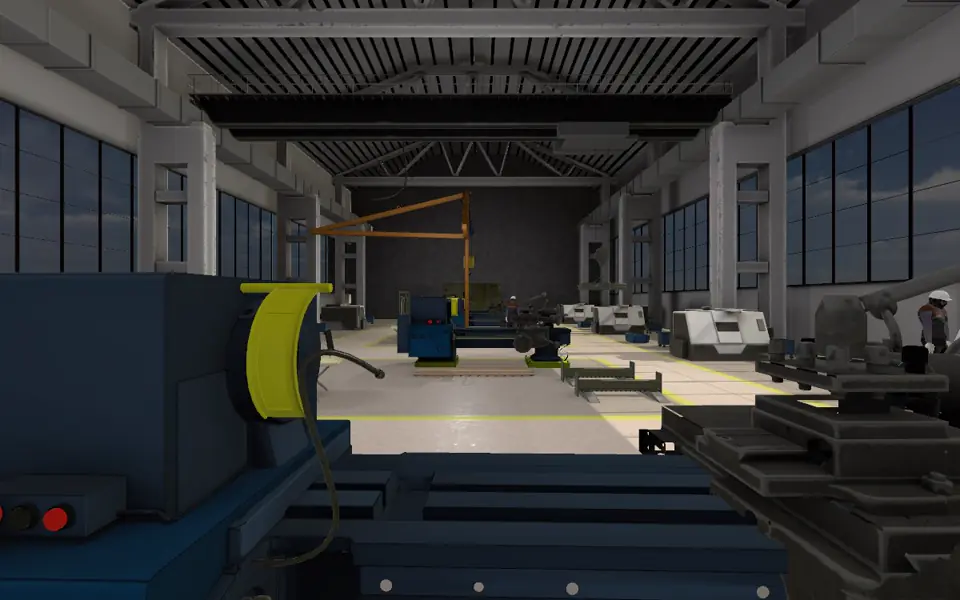
Mounting a workpiece of up to 500 kg on a lathe

Equipment operation and maintenance · Lifting and cargo handling

Mounting a workpiece of up to 500 kg on a lathe

Application
The scenario trains a worker to prepare a lathe and mount a heavy workpiece using lifting equipment.
What is practised
The participant chooses workwear, takes the foreman’s task, inspects the lathe (earthing, guard, lighting), runs it idle, measures the workpiece with a caliper and a tape, calls the slinger and watches the slinging, then sets the workpiece in the chuck jaws and secures it with the tailstock centre.
View details
Monitoring
The simulator records the actions taken and the answers to check questions, including choosing a sling according to slinging standards.
Training format
Individual or over network
Roles
Employee (Roles: 1)
Training variants
  • Mounting a workpiece of up to 500 kgOperating procedure · Individual or over network · Roles: 1
DC motor: design and connection

Equipment operation and maintenance · Electrical safety

DC motor: design and connection

Application
The scenario teaches the design of a DC motor and trains its connection for different excitation schemes.
What is practised
The electrician assembles the motor: brush rocker, end shields, brushes, shaft, fan and covers. For the connection they route the cables, strip and crimp the cores, connect them to the terminals, obtain permission to start and remove the “Do not switch on! People at work” sign.
View details
Monitoring
The connection is checked by starting the motor. If it does not turn or turns the wrong way, the participant switches off the control key, hangs the sign and corrects the connection.
Training format
Individual or over network
Roles
Electrician (Roles: 1)
Training variants
  • Motor designOperating procedure · Individual or over network · Roles: 1
  • Connection: separate excitationOperating procedure · Individual or over network · Roles: 1
  • Connection: series excitationOperating procedure · Individual or over network · Roles: 1
  • Connection: shunt excitationOperating procedure · Individual or over network · Roles: 1

Occupational safety and first aid

Personal protective equipment: selection and control

Application
The scenario is designed for section foremen: choosing personal protective equipment (PPE) and spotting violations by workers.
What is practised
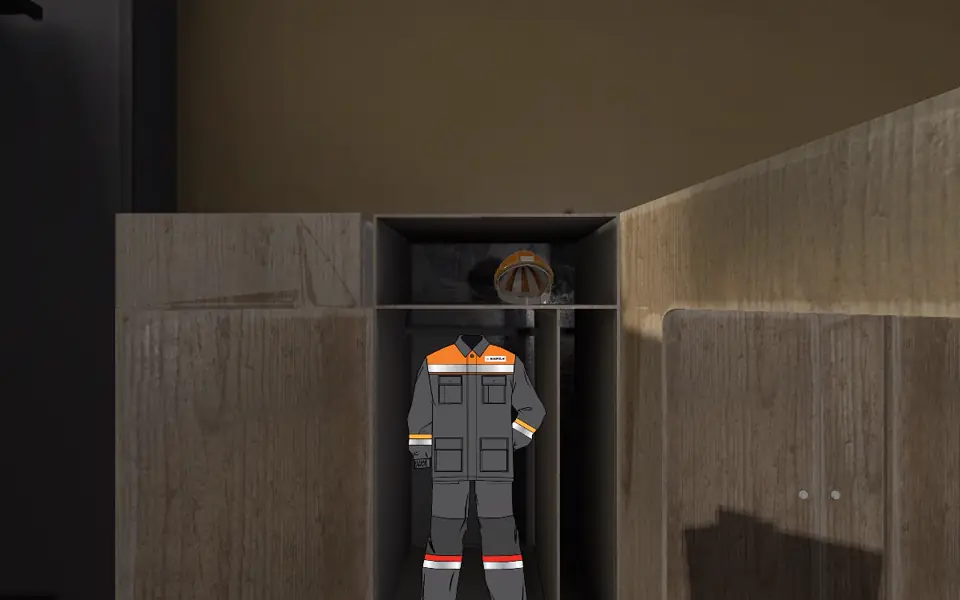
The foreman chooses the minimum PPE set, watches fitters at work and points out violations: gloves not worn, workwear soiled with lubricant, a worker without safety glasses. They then pick tools and PPE for cleaning the site, adding earplugs for the compressor room.
View details
Monitoring
The simulator records the sets chosen and the violations found. If a violation is missed, the scenario moves on to the next situation.
Training format
Individual or over network
Roles
Section foreman (Roles: 1)
Training variants
  • Personal protective equipmentIdentifying hazards and violations · Individual or over network · Roles: 1
First aid for an injured worker

Occupational safety and first aid

First aid for an injured worker

Application
The scenario trains employees to give first aid for bleeding, burns and loss of consciousness.
What is practised
The participant finds hazards at the workplace, decides who to help first, stops arterial and venous bleeding, treats thermal and chemical burns, calls an ambulance, checks the casualty’s consciousness and uses a first-aid kit.
View details
Monitoring
The simulator records the actions taken and the answers to check questions, including the order of actions.
Training format
Individual or over network
Roles
Employee (Roles: 1)
Training variants
  • First aidAbnormal situation response · Individual or over network · Roles: 1
Work at height: erecting scaffolding and permit to work

Occupational safety and first aid

Work at height: erecting scaffolding and permit to work

Application
The scenario prepares a maintenance fitter for work at height, from receiving the permit to dismantling the scaffolding.
What is practised
The participant answers questions on the permit, measures the work area, chooses a scaffold design from the drawing album, erects the scaffolding, fences off the area, completes the acceptance record and assigns the task to a worker.
View details
Monitoring
The simulator records actions and decisions. If the participant lets the worker climb the scaffolding without a safety harness, the worker falls and the scenario ends.
Training format
Individual or over network
Roles
Maintenance fitter (Roles: 1)
Training variants
  • Work at heightOperating procedure · Individual or over network · Roles: 1
Unexpected situations: electric shock and an electrical cabinet fire

Occupational safety and first aid · Electrical safety · Fire safety

Unexpected situations: electric shock and an electrical cabinet fire

Application
The scenario trains a worker to act when a colleague gets an electric shock and a fire follows.
What is practised
The participant puts on dielectric gloves, approaches the casualty without lifting their feet, switches off the isolator, drags the casualty to a safe place and starts first aid. When the electrical cabinet catches fire, they use an extinguisher and set out the notification chain.
View details
Monitoring
The simulator records actions and answers. A wrong answer to a key question restarts the scenario. Without gloves the casualty cannot be approached.
Training format
Individual or over network
Roles
Employee (Roles: 1)
Training variants
  • Unexpected situationsAbnormal situation response · Individual or over network · Roles: 1
Moving safely around the industrial site

Occupational safety and first aid

Moving safely around the industrial site

Application
The scenario teaches employees the rules for moving around an industrial site.
What is practised
Carrying a document folder, the participant chooses the route: the footpath instead of the roadside, the footbridge holding the handrail, the side of the road facing traffic, and crossing the railway on a green signal at a right angle.
View details
Monitoring
For each violation the simulator deducts points and asks the participant to name it. The participant returns to where the mistake was made. When the points run out, the route starts again.
Training format
Individual or over network
Roles
Employee (Roles: 1)
Training variants
  • Moving around the siteIdentifying hazards and violations · Individual or over network · Roles: 1
Harmful and hazardous workplace factors

Occupational safety and first aid

Harmful and hazardous workplace factors

Application
The scenario trains employees to recognise hazards on the way to work, in the office and in the repair shop.
What is practised
The participant chooses clothing for the weather and a safe way to the bus stop, handles office situations, chooses the load weight and route in the shop, gives way to an overhead crane and a forklift and identifies workplace factors: dust, noise, vibration, lighting, chemicals and physical workload.
View details
Monitoring
The simulator records the choice made in each situation and the answers to questions.
Training format
Individual or over network
Roles
Employee (Roles: 1)
Training variants
  • Harmful and hazardous factorsIdentifying hazards and violations · Individual or over network · Roles: 1
Introductory tour of the industrial site

Occupational safety and first aid

Introductory tour of the industrial site

Application
The scenario gives a trainee a first look at the site and its buildings in VR.
What is practised
The trainee walks around the site and its premises.
View details
Monitoring
An introductory scenario: the trainee learns the layout of the shops and premises before starting work.
Training format
Individual or over network
Roles
Trainee (Roles: 1)
Training variants
  • Site tourFamiliarisation · Individual or over network · Roles: 1

Let’s discuss your company’s task

Tell us which operation your employees need to master, what equipment they work with and which situations they need to practise.